Step 1
Create one operator viewThe Portal gives teams a common place to coordinate policy, visibility, and system membership.
PumaMesh connects the systems where data lives and gives approved data a governed path across edge, portal, cloud, partner, and constrained environments — policy and audit attached throughout.
Teams can avoid brittle VPN exceptions, forced portal routes, and shared infrastructure while keeping policy, protection, and evidence attached to every movement path.
The first-read story is simple: enroll the systems that matter, give them shared policy and visibility, and move approved data over the cleanest governed path available.
Step 1
Create one operator viewThe Portal gives teams a common place to coordinate policy, visibility, and system membership.
Step 2
Reach the systems that matterAgents run on servers, laptops, clusters, cloud systems, and edge devices so governance starts at the source.
Step 3
Move directly when the route is cleanWhen systems can reach each other, approved data moves directly instead of being forced through a central bottleneck.
Step 4
Use authorized paths when the network is hardWhen direct reachability is blocked, approved mesh paths can carry protected movement across firewalls, partner boundaries, and constrained links.
The Portal coordinates policy, system membership, identity, and visibility. If connectivity drops, enrolled systems continue under the last known policy and reconcile when the Portal returns.
Roster
Know which systems belongThe Portal maintains the roster of approved systems and helps peers understand who they can work with.
Policy
Send policy where it is enforcedRules for who can move what, where, and under which context travel to the systems that need to enforce them.
Identity & Keys
Keep system trust currentIdentity and key lifecycle are coordinated through the fabric so trust can be issued, rotated, and revoked centrally.
Visibility
Give operators one place to lookSystem health, transfer history, policy state, and audit context are visible in the same operating view.
If the Portal is unreachable: approved peers keep moving under the last known policy. When connectivity returns, the mesh resyncs and audit catches up.
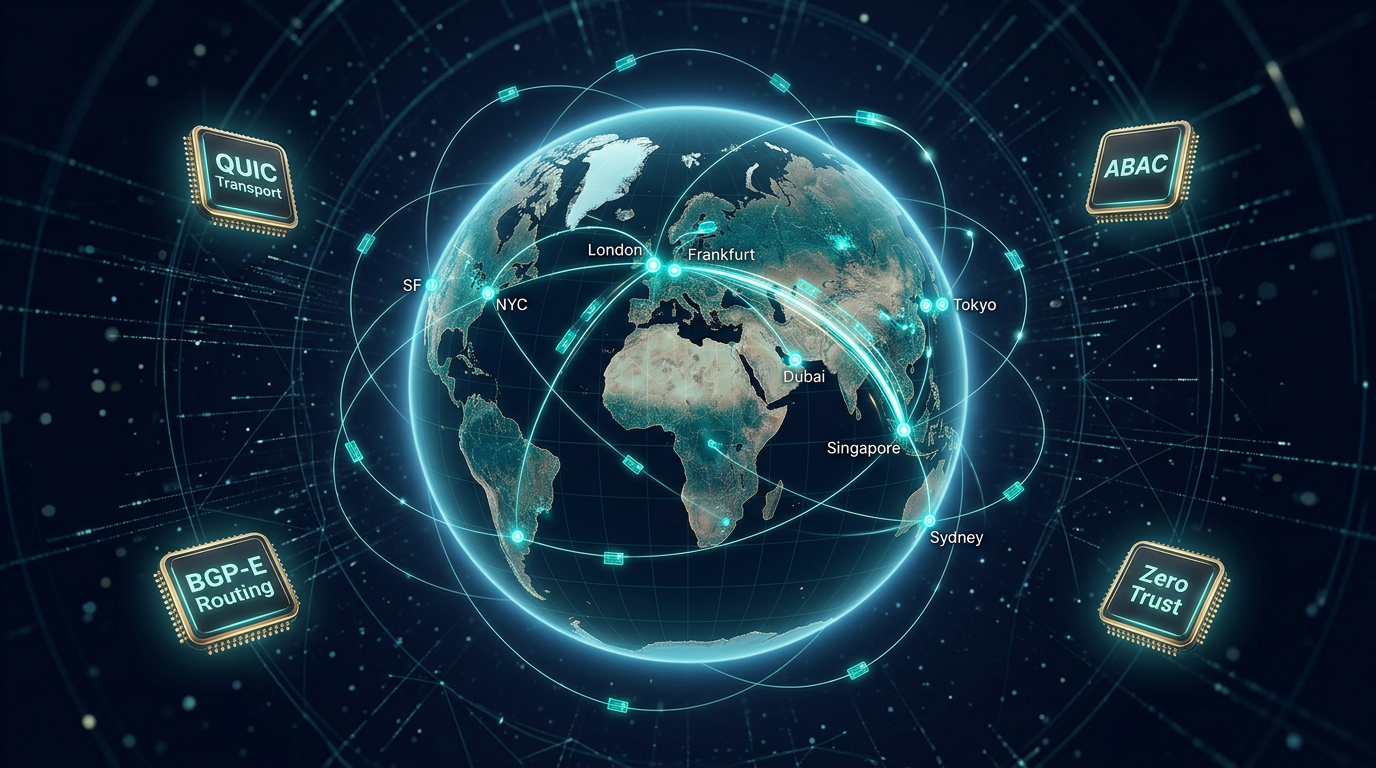
When direct movement is blocked, PumaMesh senses the live topology and adaptively routes thru an authorized forwarding path automatically — while keeping policy, identity, protection, and audit attached to the data.
Two networks that cannot see each other
Connect without merging networksTraining, production, partner, or mission environments can exchange only what policy allows without sharing infrastructure.
Restrictive firewalls
Keep movement going through restrictive firewallsWhen direct paths are blocked, the mesh can use an approved path without requiring a new VPN or permanent exception list.
Partner and B2B exchange
Exchange with partners under clear controlsCross-agency workflows, vendor pipelines, and research collaborations can move approved data while each side keeps its own infrastructure boundary.
Remote and intermittent sites
Support remote and intermittent sitesField sites, vehicle platforms, tactical edge deployments, and remote offices can keep protected movement working across constrained or intermittent links.
Transport, protection, routing, and acceleration work together so teams do not have to assemble separate tools for each part of the path.
Transport · QUIC
Use all the bandwidth you already haveQUIC multiplexed streams push data across available capacity in parallel instead of serializing through one long-distance TCP pipe. That is the engine behind the benchmark numbers.
Encryption · wolfSSL
Post-quantum protection at rest and in motionwolfSSL provides the post-quantum cryptographic layer for both the transport path and stored objects — built for constrained environments and hardened against threats that do not exist yet. Applications and users keep working through normal paths.
Routing · Sensing + Adaptive
The mesh adapts to topology changes automaticallyPumaMesh senses live topology and enrollment state to build a route table, adaptively routes to the cleanest authorized path, and routes thru an approved intermediary when the direct route is blocked — no static VPN configuration required.
Acceleration
Move large files without dropping governanceBenchmark proof shows large payloads can move quickly across distance while protection, policy, and audit stay in the path.
PumaMesh gives distributed environments one governed way to move data across the paths they already have. Fewer exception routes. Fewer integration projects. Fewer audit chains to reconcile.